
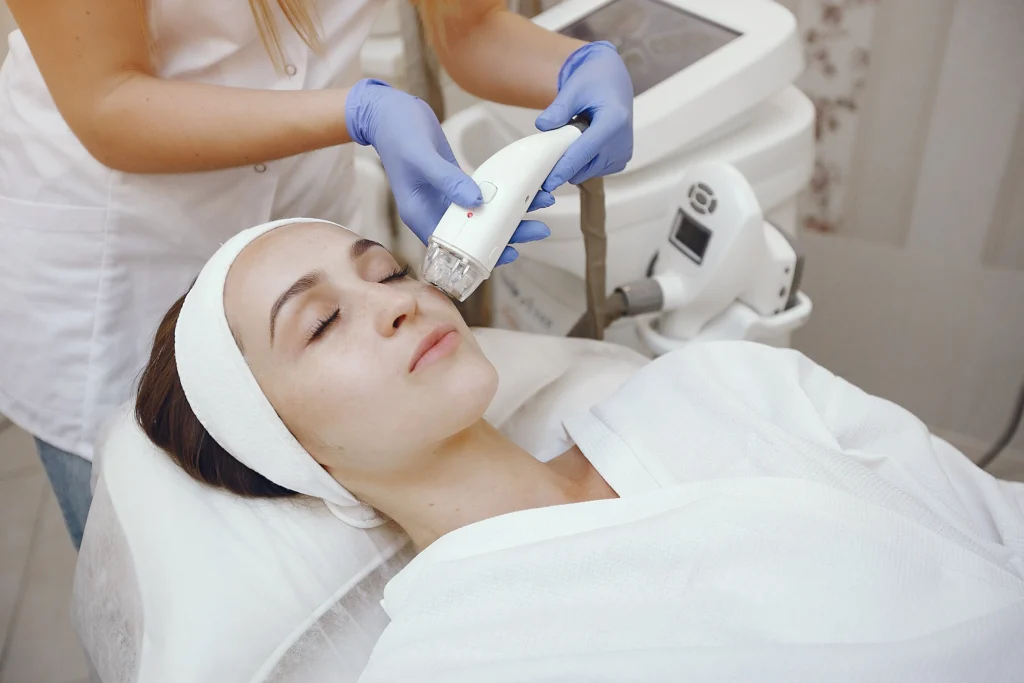
HIFU vs. RF Treatment for Skin Tightening: Which Is Best for Indian Skin Types?
Sagging skin, fine lines, and loss of facial definition are concerns that cut across age groups — and in Mumbai’s climate, where heat and humidity accelerate skin aging, the demand for effective non-surgical solutions has never been higher. Two treatments consistently lead the conversation: HIFU (High-Intensity Focused Ultrasound) and RF (Radiofrequency). Both promise skin tightening without surgery. But they work differently, suit different concerns, and — critically — behave differently on Indian skin tones.
If you are considering a skin tightening treatment in Mumbai and wondering which to choose, this guide breaks it down clearly.
What Is HIFU and How Does It Work?
HIFU treatment uses focused ultrasound energy to penetrate the deepest layers of the skin — including the SMAS layer, the same structural layer addressed in surgical facelifts. The energy creates precise thermal injury points at this depth, which triggers the body’s natural collagen repair response. The result is progressive skin lifting and tightening that develops over 2–3 months after treatment.
Key characteristics of HIFU:
- Works at depths of 1.5mm to 4.5mm, reaching the foundational support layer of the skin
- Particularly effective for lifting the jawline, brow, neck, and mid-face
- Results are gradual and long-lasting — typically 12–18 months from a single session
- Little to no downtime; mild redness or tenderness may occur for a day or two
- Not suitable for very thin skin or active skin infections
What Is RF (Radiofrequency) Treatment and How Does It Work?
Radiofrequency treatment delivers electrical energy to heat the dermis (mid-layer of the skin) to temperatures between 40–45°C. This controlled heating tightens existing collagen fibres and stimulates new collagen production. Unlike HIFU, RF works primarily in the superficial to mid-dermis and is excellent for improving overall skin texture, reducing fine lines, and providing mild to moderate tightening.
Key characteristics of RF:
- Works at shallower depths compared to HIFU — targets the dermis rather than the SMAS
- Better suited for skin texture improvement, pore tightening, and mild laxity
- Results require multiple sessions (typically 4–6) and maintenance treatments
- Comfortable procedure with minimal downtime; skin may appear flushed briefly
- Works well in combination with other treatments
HIFU vs RF: A Direct Comparison
| Parameter | HIFU | RF (Radiofrequency) |
|---|---|---|
| Depth of action | Deep (SMAS layer, 4.5mm) | Superficial to mid-dermis |
| Primary benefit | Lifting + deep tightening | Tightening + texture improvement |
| Sessions required | 1 (with annual maintenance) | 4–6 sessions |
| Results timeline | 2–3 months post-treatment | Gradual across treatment sessions |
| Downtime | Minimal (1–2 days mild redness) | Minimal to none |
| Best for | Significant sagging, jowls, neck | Early laxity, fine lines, pores |
| Pain level | Mild discomfort, tolerable | Warm sensation, generally comfortable |
| Cost per session | Higher (single session) | Lower per session, more sessions |
Both are part of the range of skin treatments available at Derma360, and the right choice depends on your specific concern and skin assessment.
Which Is Better for Indian Skin Types?
This is the most important question — and the one most blogs skip. Indian skin predominantly falls in the Fitzpatrick scale range of III to V, which means it carries a higher inherent risk of post-inflammatory hyperpigmentation (PIH) with heat-based treatments.
Here is what that means in practice:
HIFU and Indian skin HIFU is generally considered safe for Indian skin tones. Because the ultrasound energy bypasses the surface of the skin entirely and targets deep layers, there is minimal risk of surface heating that causes pigmentation changes. For patients concerned about skin tightening for Indian skin without the risk of PIH, HIFU is typically the preferred option. It is also well-suited for Mumbai’s climate because it does not create open wounds or surface disruption that sweat and humidity could aggravate.
RF and Indian skin Standard RF treatments are also safe for Indian skin, but the risk profile depends on the device and settings used. Poorly calibrated RF can cause superficial burns or trigger hyperpigmentation in darker skin tones if administered incorrectly. When performed by an experienced dermatologist in Goregaon using appropriate protocols, RF is effective and safe. The key is expert administration — not the technology itself.
The risk to avoid Aggressive heat-based treatments performed without proper Fitzpatrick assessment can worsen pigmentation treatments concerns rather than resolve them. This is why a thorough skin consultation before choosing any non-surgical skin tightening treatment in Mumbai is not optional — it is essential.
Which Should You Choose?
Choose HIFU if you:
- Have visible sagging, jowl formation, or neck laxity
- Want a single-session solution with long-lasting results
- Are concerned about pigmentation risk on Indian skin
- Want a non-surgical facelift alternative with no downtime
Choose RF if you:
- Have early-stage skin laxity or primarily want texture and pore improvement
- Are comfortable with a multi-session treatment plan
- Want to combine it with other treatments like mesotherapy or PRP for facial rejuvenation for a comprehensive result
- Have a lower budget per session
For many patients, the best outcome comes from a combination approach — HIFU for structural lifting and RF or complementary treatments for surface-level skin quality. A consultation with a qualified professional will always give you a clearer picture than a general guide.
If you are unsure which treatment fits your skin concerns, laser toning is another option worth exploring for patients whose primary concern is uneven tone alongside mild laxity.
Get a Personalised Assessment at Derma360
Every skin type responds differently to treatment. What works for one patient may not be the right fit for another — especially when skin tone, depth of concern, and lifestyle factors like Mumbai’s heat and humidity all play a role.
At Derma360, our experienced team assesses your skin thoroughly before recommending any anti-aging treatment in Goregaon. Whether you are the right candidate for HIFU, RF, or a combination approach, you will receive a clear, evidence-based treatment plan — not a one-size-fits-all solution.
To book your consultation at our skin clinic in Goregaon, call 9920126628 or book your appointment here.
FAQs: HIFU vs RF for Skin Tightening
Q1. Is HIFU or RF better for skin tightening in Mumbai’s climate?
HIFU is generally preferred in humid climates like Mumbai’s as it has no surface disruption, reducing the risk of post-treatment infection or pigmentation triggered by sweat and heat.
Q2. How many sessions of RF are needed to see results?
Most patients require 4–6 sessions spaced 2–4 weeks apart, followed by maintenance treatments every 6–12 months.
Q3. Is HIFU safe for darker Indian skin tones?
Yes. HIFU bypasses the skin surface entirely, making it one of the safest skin tightening options for Fitzpatrick III–V skin tones.
Q4. Can HIFU and RF be done together?
Yes, they can be combined in a phased plan. HIFU addresses deep structural lifting while RF improves superficial texture — together they deliver more comprehensive results.
Q5. How long do HIFU results last?
Results from a single HIFU session typically last 12–18 months, after which a maintenance session is recommended.
Q6. What is the downtime for HIFU vs RF?
Both have minimal downtime. HIFU may cause mild tenderness or redness for 1–2 days. RF typically causes brief flushing that resolves within hours.
Citations
- American Academy of Dermatology — Non-Surgical Skin Tightening https://www.aad.org/public/cosmetic/younger-looking/ultrasound-skin-tightening
- Journal of Clinical and Aesthetic Dermatology — HIFU for Facial Lifting https://jcadonline.com/
- Indian Journal of Dermatology, Venereology and Leprology — Radiofrequency in Indian Skin https://ijdvl.com/
- DermNet NZ — Radiofrequency Skin Treatments https://dermnetnz.org/topics/radiofrequency-skin-treatments
- National Library of Medicine (PubMed) — Collagen Remodeling with HIFU and RF https://pubmed.ncbi.nlm.nih.gov/